Bel Air South, MD · Harford County
Basement Water Damage Restoration in Bel Air South, MDBasement Sewer Backup Cleanup & Emergency Basement Flood Cleanup
Basement Water Damage Restoration in Bel Air South runs from basement water extraction and basement floor water removal to basement dehumidification.
Answered 24/7
Local Basement Water Damage Restoration Near Bel Air South
In a Bel Air South home with a basement and a sump pump, a pump that fails during heavy rain lets water rise fast. Furnaces, water heaters, washers and stored belongings all sit at floor level and take the damage first.
Homes in Bel Air South and nearby Bel Air North, Fallston and Edgewood with basements deal with seepage, plumbing leaks and sewer backups. Help with basement water damage restoration covers pumping, removal of wet materials and drying of walls and concrete.
The Basement Water Damage Restoration Process in Bel Air South
Basement Sewer Backup Cleanup
After a sewer backup, cleanup and disinfection come before drying, so contaminated surfaces are not left in place.
Emergency Basement Flood Cleanup
Emergency cleanup starts with stopping the source where possible, checking for electrical hazards and pumping out the water.
Basement Mold Prevention
Fast extraction and drying are the main ways to limit microbial growth in a basement. Surfaces that stayed wet can be treated once dry.
Basement Water Extraction
Extraction starts at the lowest point, often near the floor drain or sump, and works outward until no pooled water remains.
Basement Drying Services
Drying a basement takes longer than drying an upper floor because the air is cool and the concrete holds moisture.
Indicators for Basement Water Damage Restoration in Bel Air South
Rusted Appliances or Pipes
Rust on the water heater, furnace base or pipes points to repeated moisture or past flooding.
Damp or Musty Odors
A damp, earthy or musty smell in the basement often means hidden moisture in walls, carpet or the slab.
High Humidity Levels Below-Grade
A basement that stays damp and clammy even on dry days has a moisture source that needs attention.
Mold on Surfaces
Dark spots on drywall, framing or stored boxes mean the area has stayed wet for days.
How Basement Water Damage Restoration Works in Bel Air South
Step 1: Floodwater Pump-Out
Submersible pumps remove deep water, and electrical hazards are checked before anyone walks in it.
Step 2: Deep Moisture Extraction
Extractors pull water from carpet, pad and the concrete floor after the deep water is gone.
Step 3: Air Circulation and Drying
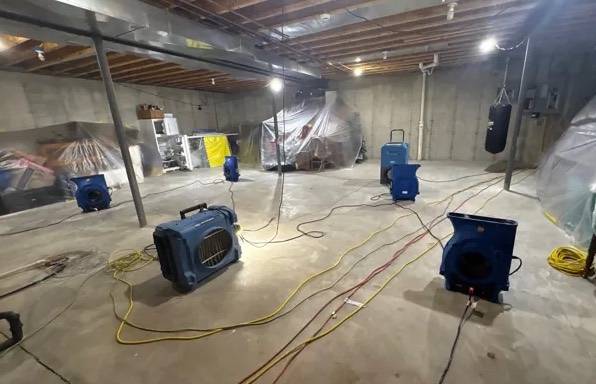
Air movers keep dry air moving across walls and floors throughout the basement.
Step 4: Dehumidification and Verification
Dehumidifiers run until humidity and material readings confirm the basement is dry.
Why Basement Water Damage Occurs in Bel Air South
Stormwater Runoff Into Lower Levels
Heavy rain running off hard ground or a sloped yard can pour down stairwells and under doors into below-grade rooms.
Faulty Basement Waterproofing
Old or failed waterproofing on foundation walls lets water through during wet weather.
Foundation Cracks and Leaks
Cracks in foundation walls let groundwater and melting snow seep into the basement.
Water Heater or Appliance Leaks
Water heaters, washers and utility sinks in the basement can leak or fail without warning.
Basement Water Damage Restoration for All Properties in Bel Air South
Residential Basement Water Damage Restoration
Finished basements used as living space need carpet, pad and lower drywall checked carefully. Soaked materials are removed so the walls and slab can dry.
Commercial Basement Water Damage Restoration
Businesses with below-grade storage need inventory moved out of the water quickly. Wet stock is separated and documented for insurance.
Professional Basement Water Damage Restoration or DIY in Bel Air South?
Fans alone can push damp air into the rest of the house. Basement drying needs dehumidifiers to pull the moisture out of the air and the concrete.
Factors Affecting Basement Water Damage Restoration Cost in Bel Air South
The cost of basement water damage restoration in Bel Air South depends on how much water there is, whether it is clean or sewage and how much finished material must be removed.
Emergency Service
Night, weekend and storm calls can cost more than a scheduled visit.
Secondary Damage
Damage to furnaces, water heaters and belongings adds repair and replacement costs.
Access Complexity
Narrow stairs, low ceilings and stored contents can make the work slower.
Does Insurance Cover Basement Water Damage Restoration?
Flood damage from rising outside water usually needs flood insurance. Water from inside the home, like a broken pipe, is more often covered.
Advantages of Hiring Local Pros in Bel Air South for Basement Water Damage Restoration
Mold Prevention Focus
Fast drying is the main way to limit microbial growth in a below-grade space.
Containment Strategies
Plastic sheeting keeps contaminated areas separate from clean parts of the house.
Water Extraction First
Water is removed from floors, carpet and pad before drying starts, which shortens drying time.
Emergency Basement Water Damage Restoration Available in Bel Air South
A flooded basement damages walls, furnaces, water heaters and belongings quickly. Call (410) 237-0394 for basement water damage restoration in Bel Air South at any hour.
Call Now (410) 237-0394Local Basement Water Damage Restoration Coverage: Bel Air South and Beyond
Nearby areas served for basement water damage restoration include Bel Air North, Fallston and Edgewood, with the same pumping and drying steps used in Bel Air South.
- Basement Water Damage Restoration in Bel Air North
- Basement Water Damage Restoration in Fallston
- Basement Water Damage Restoration in Edgewood
- Basement Water Damage Restoration in Joppatowne
- Basement Water Damage Restoration in Aberdeen
- Basement Water Damage Restoration in Havre de Grace
- Basement Water Damage Restoration in White Marsh
- Basement Water Damage Restoration in Perry Hall
- Emergency Damage Restoration in 21015
- Storm Damage Restoration in 21015
- Water Damage Restoration in 21015
- Water Extraction Service in 21015
- Water Leak Detection in 21015
- Water Removal Service in 21015
Basement Water Damage Restoration FAQs
What is involved in basement water damage restoration?
Pumping out water, removing soaked materials, cleaning contaminated areas, drying walls, framing and concrete, and dehumidifying until readings are normal.
How long does below-grade drying take after a flood?
Often several days or longer, since concrete and cool basement air dry slowly. Daily readings show progress.
How soon should I call for basement water extraction after a leak?
Right away. Water wicks up drywall and soaks framing within hours, and below-grade spaces are slow to dry.
How is basement sewer backup cleanup different from regular flooding?
Sewage carries bacteria, so it needs protective gear, removal of porous materials and disinfection before drying.
What is the purpose of basement wall drying?
To remove water from drywall, insulation, framing and concrete so the walls can be repaired without trapping moisture.