Garrison, MD · Baltimore County
Basement Water Removal in Garrison, MDBasement Drying Services & Basement Wall Drying
Basement Water Removal in Garrison runs from basement water pump out and basement drying services to basement dehumidification.
Answered 24/7
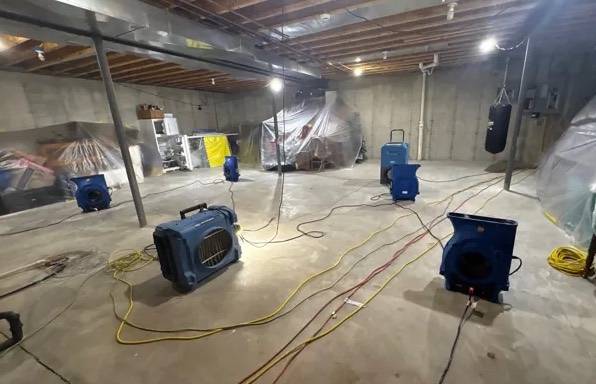
Expert Basement Water Removal in Garrison, Pikesville, Owings Mills and Randallstown
In Garrison, a finished basement or lower level takes more work after a flood. Carpet, pad, laminate, drywall and insulation all trap water against the concrete and framing.
A single storm or burst pipe in Garrison can flood a basement. Local water extraction experts serve Garrison and nearby Pikesville, Owings Mills and Randallstown, with help available around the clock.
Specialized Basement Water Removal for Garrison
Basement Drying Services
Equipment stays until the basement reads dry, not just until it looks dry. Removing it early lets dampness return.
Basement Wall Drying
Concrete and block walls dry with directed airflow and dehumidification, which pull water out of the masonry.
Basement Dehumidification
After drying, a household dehumidifier may still be needed to keep basement humidity in a healthy range.
Emergency Basement Flooding
Emergency response starts with making power safe, stopping the source if possible and pumping out the water.
Basement Moisture Inspection
An inspection shows how high water wicked up the walls and how far it spread under flooring, which sets the drying plan.
Warning Signs You Need Basement Water Removal
Rusted Appliances or Furniture
Rust on appliance bases, furniture legs or metal shelving points to standing water or long-term dampness.
Warped or Buckling Flooring
Flooring that buckles, lifts or feels spongy has water trapped between it and the slab.
Mold or Mildew
Dark spots on drywall, framing or stored items mean the area has stayed wet for days.
High Humidity and Condensation
Water on pipes and windows, or a constantly clammy feel, means basement humidity is too high.
How Basement Water Removal Works in Garrison
Step 1: Emergency Water Extraction
Power is made safe, then pumps and extractors remove standing water from the basement floor.
Step 2: Detailed Moisture Inspection
Meters map wet walls, framing and slab areas, including behind finished walls and under flooring.
Step 3: Drying and Dehumidification
Air movers and large dehumidifiers run continuously, with readings checked every day.
Step 4: Final Verification and Monitoring
Readings are compared to dry areas, and equipment is removed only when the basement tests dry.
Why Basements Flood in Garrison
Clogged or Damaged Gutters
Clogged gutters and short downspouts dump roof water right next to the foundation.
Heavy Rainfall and Storm Flooding
Heavy rain saturates the soil and pushes water through walls, cracks and the floor joint.
High Water Table and Hydrostatic Pressure
A high water table presses groundwater against the slab and walls, forcing it inside.
Window Well Leaks and Drainage
Window wells without drains or covers fill with rain and leak through the windows.
Basement Water Removal for Homes and Businesses
Residential Basement Water Removal
In homes, a wet basement often means damaged carpet, drywall and stored belongings, plus a furnace or water heater sitting in water. Water is pumped out and the space dried.
Commercial Basement Water Removal
In commercial buildings, basements often house mechanical rooms and storage. Water is removed so systems can be checked to determine whether they can be restarted safely.
When to Hire Local Pros for Basement Water Removal
You can move belongings up off the floor and run the dehumidifier you already own. Drying soaked walls and slab needs larger equipment and readings to confirm the job is done.
Understanding Basement Water Removal Pricing
Waterproofing and drainage work are separate costs. In Garrison, they may be needed to stop the next flood.
Access and Complexity
Narrow stairs, low ceilings and crowded storage areas make the work slower and longer.
Additional Services
Antimicrobial treatment, contents cleaning and repairs after drying add to the cost.
Affected Materials
Finished walls, carpet and laminate take more removal work than bare concrete.
Does Insurance Cover Basement Water Removal?
Many homeowner policies cover sudden basement water from a burst pipe but not groundwater seepage. Sewer backup coverage is often an add-on, so check yours.
The Value of Professional Basement Water Removal
Moisture Inspection
Meters and thermal cameras find water in walls, floors and slab that looks dry.
Methodical Water Removal Process
Water is removed in a set order: pump-out, extraction, removal of soaked materials, then drying.
Industry Drying Standards
Water removal and drying follow industry water damage standards, with readings at every visit.
24/7 Basement Water Removal When You Need It
The faster a basement is pumped out, the more can be saved. Call (410) 237-0394 for basement water removal in Garrison as soon as you see water.
Call Now (410) 237-0394Communities Served for Basement Water Removal
Nearby areas served for basement water removal include Pikesville, Owings Mills and Randallstown, with the same pumping and drying steps used in Garrison.
- Basement Water Removal in Pikesville
- Basement Water Removal in Owings Mills
- Basement Water Removal in Randallstown
- Basement Water Removal in Lochearn
- Basement Water Removal in Milford Mill
- Basement Water Removal in Reisterstown
- Basement Water Removal in Mays Chapel
- Basement Water Removal in Cockeysville
Basement Water Removal FAQs
What should I do right after basement flooding?
Make power safe, avoid sewage, move belongings above the water, take photos and call for water removal.
How long does basement drying take?
Often several days or longer, because concrete and cool basement air hold moisture. Daily readings show when it is done.
Does basement flood cleanup include mold prevention?
Fast drying is the main prevention. Wood and concrete that stayed wet can be treated with an antimicrobial once dry.
What is involved in basement water removal?
Making power safe, pumping out standing water, extracting floors and carpet, removing soaked materials and dehumidifying until dry.
What is the difference between a pump out and extraction?
A pump out removes deep standing water. Extraction pulls the remaining water from carpet, pad and floors.