Owings Mills, MD · Baltimore County
Basement Water Removal in Owings Mills, MDBasement Wall Drying & Basement Drying Services
After a burst pipe or storm, Basement Water Removal in Owings Mills means basement water pump out, basement wall drying and basement drying services.
Answered 24/7
Basement Water Removal Solutions for Owings Mills Homeowners
Basement Water Removal in Owings Mills starts with safety. Water near the furnace, water heater or electrical panel can be dangerous, so power is made safe before anyone steps into it.
Homes in Owings Mills and nearby Randallstown, Garrison and Milford Mill with basements face storm seepage, sewer backups and plumbing leaks. Help with basement water removal covers pump-out, wall and floor drying and dehumidification.
Basement Water Removal Services in Owings Mills
Basement Wall Drying
Basement walls are checked with moisture meters. Wet drywall is cut back above the water line, and insulation behind it is removed.
Basement Drying Services
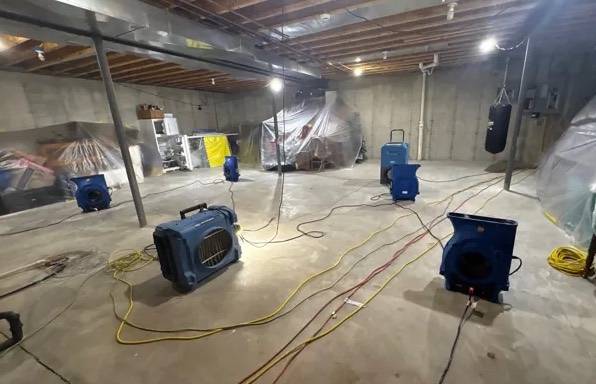
Equipment stays until the basement reads dry, not just until it looks dry. Removing it early lets dampness return.
Basement Dehumidification
Large dehumidifiers pull moisture from basement air, which lets walls, framing and the slab release the water they absorbed.
Sump Pump Failure Water Cleanup
Cleanup after a sump failure includes drying the area around the pit and noting whether the pump, switch or power was the cause.
Emergency Basement Flooding
Help is available any hour when water is rising in the basement from a storm, a sewer backup or a burst pipe.
Indicators You Need Professional Water Removal
Musty Odors and Mold Smell
A musty or damp smell in the basement points to wet materials hidden somewhere in the space.
Efflorescence on Concrete Walls
White, powdery deposits on concrete walls mean water is passing through the masonry.
Gurgling Sounds From Drains
Gurgling floor drains or slow drains can be an early sign of a sewer line problem.
Standing Water in Basement
Standing water anywhere on the basement floor needs to be pumped out before it soaks the walls.
How Basement Water Removal Works in Owings Mills
Step 1: Safety Assessment and Pump Out
Electrical hazards are checked, then deep water is pumped outside away from the foundation.
Step 2: Content Removal and Damage Documentation
Wet belongings are moved, and photos record the water level and damaged materials.
Step 3: Targeted Water Removal and Drying
Carpet is extracted, wet drywall is cut back and air is aimed at walls and the slab.
Step 4: Sanitization and Moisture Control
Surfaces touched by dirty water are disinfected, and dehumidifiers keep humidity low.
What Causes Water Damage in Basements
Sewer Line Backups and Blockages
A blocked sewer line can push wastewater up through basement floor drains and toilets.
Clogged or Damaged Gutters
Clogged gutters and short downspouts dump roof water right next to the foundation.
Improper Landscape Grading
Soil that slopes toward the house directs rainwater straight to the basement walls.
Heavy Rainfall and Storm Flooding
Heavy rain saturates the soil and pushes water through walls, cracks and the floor joint.
Residential and Commercial Basement Water Removal in Owings Mills
Residential Basement Water Removal
Families should keep children and pets away from basement water until power is safe and the type of water is known.
Commercial Basement Water Removal
In restaurants and shops, basement water near food or stock storage needs removal and cleaning before those areas are used again.
Professional Basement Water Removal Versus Do-It-Yourself
You can move belongings up off the floor and run the dehumidifier you already own. Drying soaked walls and slab needs larger equipment and readings to confirm the job is done.
Factors Affecting Basement Water Removal Cost
The pros look at water depth, water type and basement finishes before pricing basement water removal in Owings Mills, then explain the scope.
Basement Square Footage
Larger basements need more extraction, more drying equipment and more days of drying.
Drying Time Required
Basements dry slowly, and each extra day of equipment adds to the total.
Affected Materials
Finished walls, carpet and laminate take more removal work than bare concrete.
Does Insurance Cover Basement Water Removal?
Coverage for basement water removal depends on the water source and your policy. The pros document the damage and drying, and your insurer decides what is covered.
Why Owings Mills Homeowners Trust Local Pros for Basement Water Removal
Methodical Water Removal Process
Water is removed in a set order: pump-out, extraction, removal of soaked materials, then drying.
Industry Drying Standards
Water removal and drying follow industry water damage standards, with readings at every visit.
Advanced Drying Equipment
Pumps, extractors and large dehumidifiers remove water much faster than household tools.
Round-the-Clock Basement Water Removal for Owings Mills
Water still rising in the basement? Call (410) 237-0394 now for basement water removal in Owings Mills before the water reaches finished rooms and stored belongings.
Call Now (410) 237-0394Local Basement Water Removal Coverage for Randallstown, Garrison and Milford Mill
Need basement water removal outside Owings Mills? Service also covers Randallstown, Garrison and Milford Mill, including emergency help during storms.
- Basement Water Removal in Randallstown
- Basement Water Removal in Garrison
- Basement Water Removal in Milford Mill
- Basement Water Removal in Pikesville
- Basement Water Removal in Reisterstown
- Basement Water Removal in Lochearn
- Basement Water Removal in Mays Chapel
- Basement Water Removal in Cockeysville
- Emergency Damage Restoration in 21117
- Storm Damage Restoration in 21117
- Water Damage Restoration in 21117
- Water Extraction Service in 21117
- Water Leak Detection in 21117
- Water Removal Service in 21117
Basement Water Removal FAQs
What causes basement floor water damage?
Storm seepage, burst pipes, appliance leaks, foundation cracks and sewer backups through floor drains are the usual sources.
Can I dry my basement myself with fans?
Fans help with surface water, but walls and concrete need dehumidifiers and readings to dry fully.
Why is fast water removal so important for basements?
Basements dry slowly, so every hour of standing water adds drying days and more materials to replace.
How is contaminated water handled in a basement?
With protective gear, containment, removal of porous materials and disinfection of hard surfaces before drying.
Why is basement dehumidification important after pumping?
Walls and concrete keep releasing moisture for days. Dehumidifiers remove it so the basement does not stay damp.